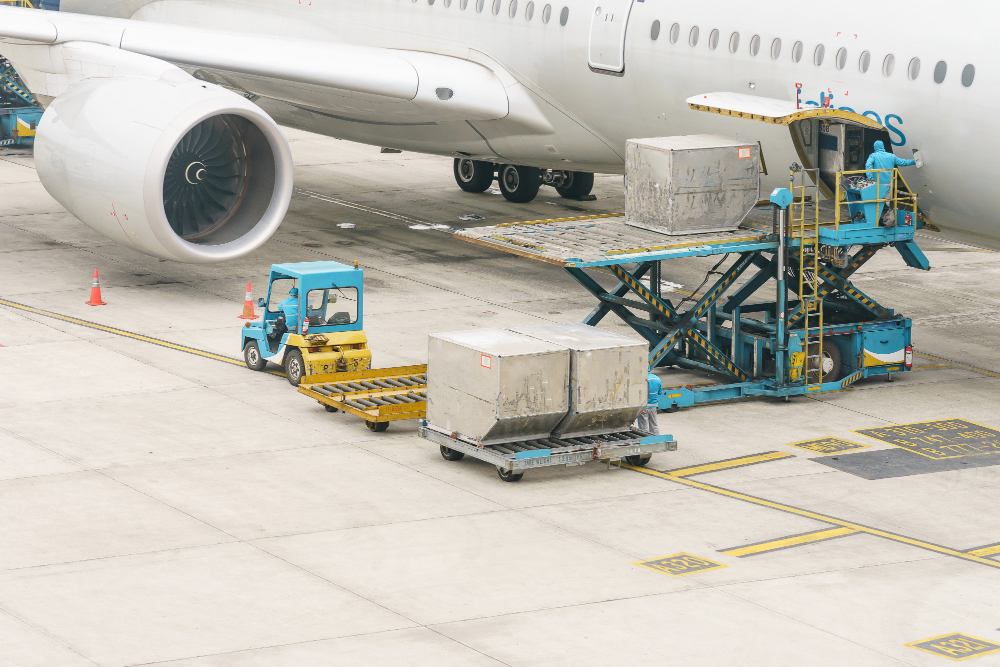
Air cargo is key to many global supply chains. It allows businesses to tap into international markets and differs from ground transport or shipping by opening up alternative routes across the world. Plus, with air freight, cargo can be delivered at speed. Statistics show that air freight global volumes reached 65.5 million metric tons in 2021, with this value forecasted to reach 57.7 million metric tons in 2023.
Several factors regarding the transportation of goods internationally have the potential to impact the industry in one way or another. These include demand within E-commerce, shipping rates and supply chain diversification, amongst other influences. Here’s what you need to know about the emerging trends within the world of air freight.
Manufacturing of goods
Manufacturing trends across the globe have a huge impact on air freight. Emerging trends driven by consumer demand will simultaneously lead to higher demand for air freight so that goods can be transported from A to B. For example, higher demand in car manufacturing has seen an increased need for specialist automotive air charter services to help processes continue to run smoothly.
Global affairs and humanitarian crises can also impact the demand for air freight. For example, during the pandemic, a larger proportion of pharmaceuticals and personal protective equipment was flown across the globe. Demand is a key driver when it comes to supply chain logistics.
The impact of rising e-commerce
E-commerce offers customers a whole new world of shopping online. It’s fast and it’s convenient, with orders generally being processed within the same day or within a matter of days.
Inevitably, the freight industry will experience increased pressure during peak seasons, such as Black Friday and Christmas. At the same time, air freight is constantly having to compete with other transportation modes in light of the speed that E-commerce sites demand.
Expanding into global emerging markets
Emerging markets include the likes of China and India, which are expanding at a rapid pace. As a result, their air freight market is expected to continue increasing steadily until around 2031. This, in part, is down to the aerospace industry and its projected growth.
Where we’ve seen past trends across Western countries, the likelihood is that we’ll see this in countries replicating similar, growing markets.
Sustainability and partnerships
There’s no denying that air freight, like many other forms of transportation, contributes to climate change due to the release of greenhouse gases. That’s why the industry is continually looking to adapt to innovative aircraft engine designs and other pioneering technologies.
In the meantime, offsetting the environmental impact is one way that companies can help to make a difference. This can be done with carbon offsetting or other environmental projects and schemes, such as plastic recovery and upcycling programs.
To conclude…
The air cargo industry is constantly evolving and adapting to the changes we see in society. On top of this, it’s clear that consumer demand, wherever that is in the world, can also play an important role.
So long as the air freight industry can meet consumer demands, both through expectations in the delivery of goods, as well as environmental pledges, there’s no reason air cargo shouldn’t be sticking around.




More Stories
PTC launches Arena Supply Chain Intelligence solution to mitigate supply chain risks
TMS Launches Industry-First Hybrid DVS Solution For Optimum Driver Visibility And Road Safety Performance
Last Call to Apply for GWR’s Community Fund as Railway 200 Celebrations Begin