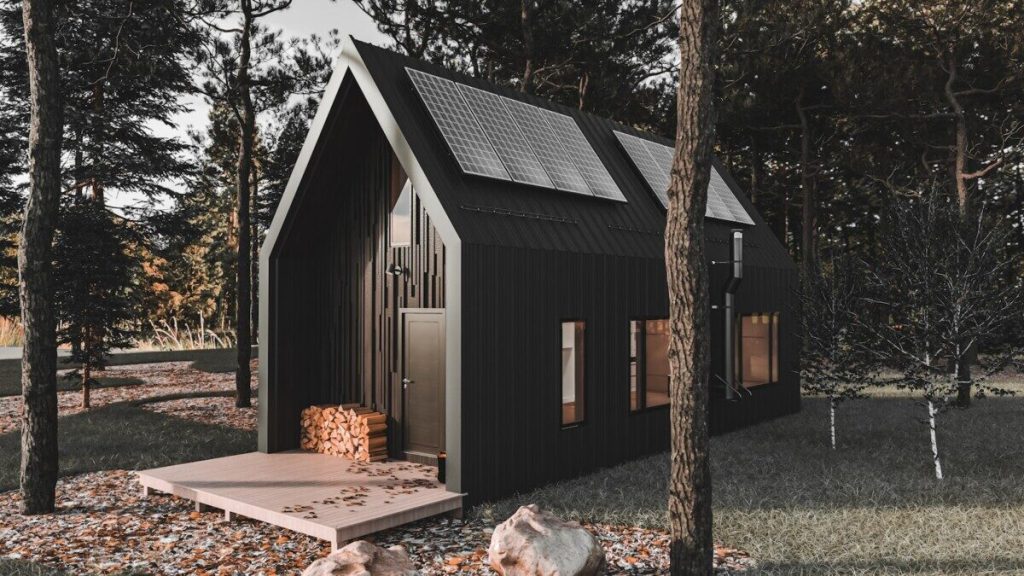
As house prices remain out of reach for millions, the viral promise of £10,000 tiny homes is gaining traction. Planning experts say the figure masks the real cost of legal living but also argue the model shouldn’t be dismissed outright.
In a country where the average home costs around £270,000 and first-time buyers are routinely asked for deposits exceeding £30,000 according to the UK House Price Index, the idea of a £10,000 home feels almost impossible to ignore.
But experts warn that the headline figure rarely reflects the full cost of creating a legal, liveable home though they also say tiny homes can work when approached realistically.
“People see £10,000 and think they’ve found a shortcut out of the housing crisis,” said Aaron Basi, Head of Town Planning at Planning By Design. “In reality, that usually covers only the shell. The expenses to make it lawful and liveable come afterwards and they add up fast.”
Why £10k is misleading
Tiny homes compact, factory-built dwellings often marketed online as “move-in ready” are increasingly positioned as a solution to Britain’s housing affordability crisis. For renters squeezed by rising costs and adults unable to leave the family home, the appeal is obvious: no mortgage, minimal space, and a price tag that appears to bypass the market entirely.
But the £10,000 figure typically excludes key costs: transport and crane hire, foundations, utility connections, planning applications, drawings, and professional fees. Depending on the location and site requirements, these can add £10,000–£25,000 to the project.
“A tiny home can absolutely be a positive housing option,” said Gavin Nicholson, Head of Design at Planning By Design. “When it’s well designed and properly planned, it can deliver comfort, sustainability and affordability in a way larger homes often can’t.”
Where tiny homes are most likely to work
Planning By Design highlights that tiny homes are most viable in areas where land values are high, space is constrained, and planning frameworks already support efficient use of land conditions that are strongest in London, where the average property costs around £561,000 resulting in a ridiculous deposit budget for seeking a home (UK House Price Index).
“In London, the issue isn’t demand, it’s space,” said Basi. “That’s where tiny homes can make the most sense, particularly on constrained or unconventional sites that would never support a traditional house.”
Backland plots, underused garages, surplus garden land, and infill sites between existing buildings are far more common in London boroughs than elsewhere. In these locations, a compact, well-designed dwelling can align with local planning policies focused on gentle densification, sustainability, and meeting housing need without large-scale redevelopment.
Outside the capital, the model can also work in high-demand urban areas such as parts of the South East, university cities, and commuter towns but only where local planning policy supports small-unit delivery and site constraints make conventional housing unviable.
“Tiny homes aren’t a one-size-fits-all solution,” said Nicholson. “They work best in places where land is scarce, density is already accepted, and good design can unlock sites that would otherwise sit unused.”
Design still determines whether savings last
While tiny homes can reduce energy use compared with traditional housing, experts warn that poor design choices can quickly undermine affordability.
“A badly designed tiny home may be cheap to buy, but expensive to live in,” Nicholson said. “Poor insulation, inefficient layouts and non-compliant materials often lead to higher running costs and homes that don’t meet long-term standards.”
As sustainability expectations rise and building performance becomes more closely scrutinised, quality design is increasingly central to whether tiny homes remain viable over time.
A solution but not a shortcut
Planning By Design argues that tiny homes can play a role in easing housing pressure, but only when framed realistically.
“The danger is presenting £10,000 as the full cost,” said Basi. “That risks people investing savings into something that can’t legally be lived in. Good planning doesn’t block innovation, it protects people from costly mistakes.”
As the housing crisis deepens, interest in alternative housing models is unlikely to fade. But experts say that real affordability will come not from headline figures alone, but from honest conversations about planning, regulation, and what it truly takes to turn a small building into a home.
Thinking about a tiny home? Discover the planning rules and real costs in our full guide: https://planning-by-design.co.uk/tiny-house-planning-permission-uk/




More Stories
Selling a probate house – property expert answers the questions she’s asked the most.
Forget party politics: these are the five things ANY housing minister must do to reform the property market
Property expert warns affordability remains biggest obstacle as “cautious optimism returns to UK housing market”